> For the complete documentation index, see [llms.txt](https://help.sbtinstruments.com/llms.txt). Markdown versions of documentation pages are available by appending `.md` to page URLs; this page is available as [Markdown](https://help.sbtinstruments.com/more/how-to-guides/break-up-cell-clumps.md).
# Break up cell clumps
Some bacteria form chains or clumps that a vortex cannot separate. Break them into single cells before you measure.
Does your sample contain bacteria that form chains or clumps? Then break them up into single cells before you measure.
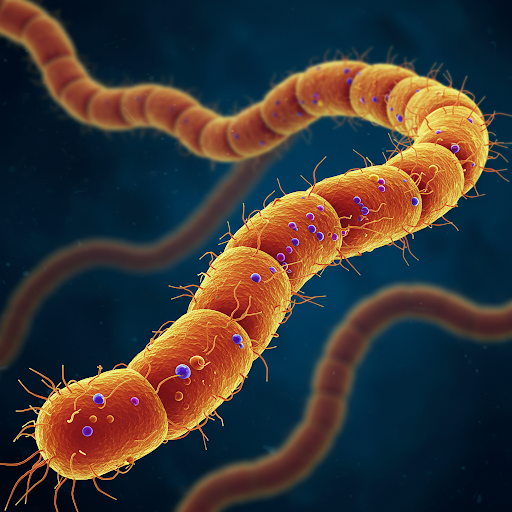
Illustration of chain-forming bacteria
Not sure? Look at your sample under a microscope. Chains are typical of *Streptococcus*, *Lactococcus* and *Bacillus*, and clusters of *Staphylococcus*.
Your BactoBox® counts a clump as one cell, so a clumped sample reads low and its cell size reads high. Large clumps can also block the flow paths in your setup.
## Two methods to start with
No single protocol works for every organism. These two are a reasonable place to begin.
### Bead beating
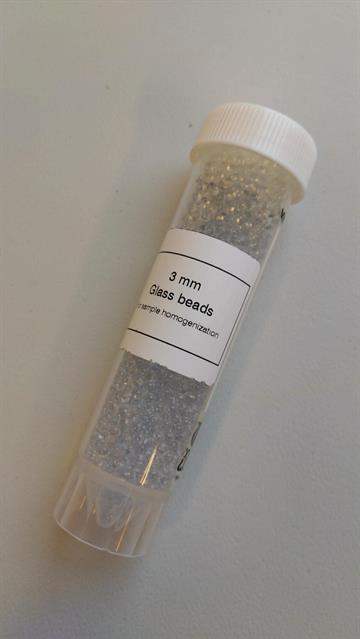
3 mm glass beads
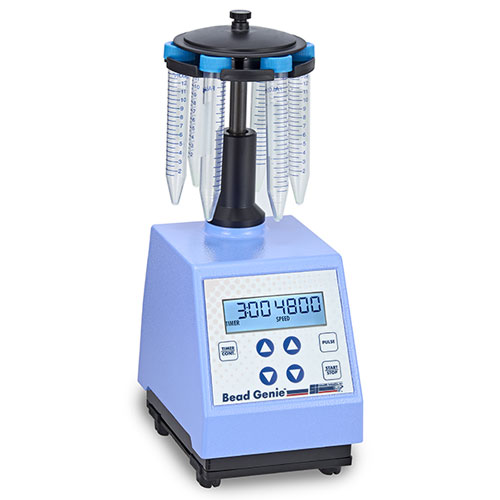
Bead beater
Add 1 mL of [3 mm glass beads](/item-register/consumables/glass-beads-3-mm-50-g.md) to 5 mL of sample. Run for 1 minute at maximum speed in a bead beater, or 3 minutes at maximum speed on a vortex mixer.
### Syringe homogenization
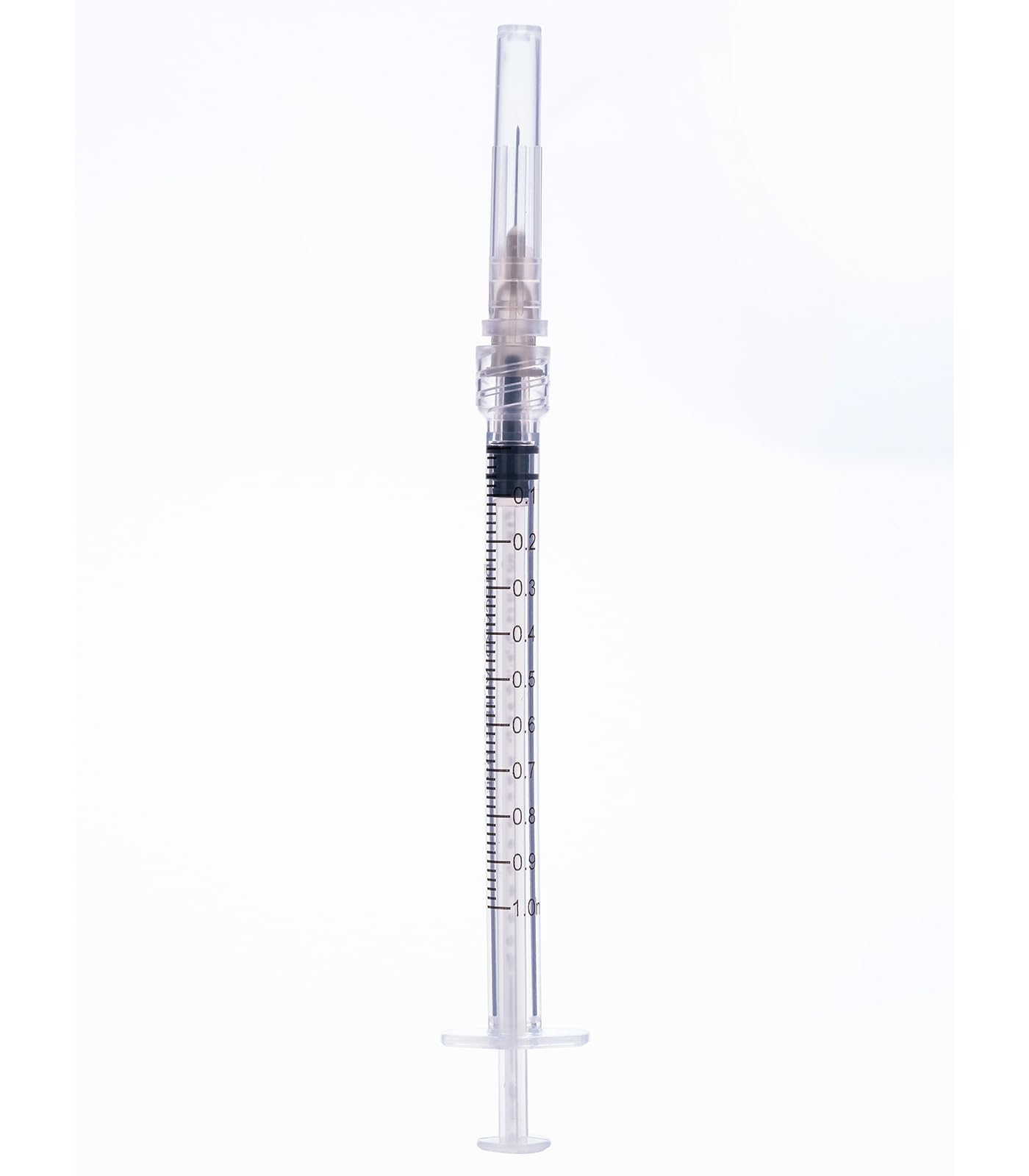
Syringe with 27G needle
Pass 200 µL of sample through a 27G needle 20 times.
## Check that it worked
Treat the same sample a little harder and measure again. If cells/mL rises, clumps were still there. If it falls, you are lysing cells, and a lysed cell is not counted. A microscope confirms the clumps are gone.
## Find a method for your organism
Other groups may have solved this for your genus already. Search [Google Scholar](https://scholar.google.com/) and [PubMed®](https://pubmed.ncbi.nlm.nih.gov/) for your genus together with terms such as "flow cytometry", "disaggregation", "single-cell", "dispersant" and "homogenization". Procedures developed for flow cytometry are the ones worth copying, because they are built to give single, non-lysed cells.
{% hint style="info" %}
Actinobacteria such as *Streptomyces* form filamentous balls more than 100 µm across. We have not found a way to break those into single cells without unacceptable lysis, so we do not recommend BactoBox® for actinobacterial filaments. A custom solution can count their exospores instead.
{% endhint %}
## Custom method development
Finding a disaggregation procedure for a specific organism is development work rather than a setting you can change. SBT offers it as a paid [custom solution](/advanced/what-is-a-custom-solution.md). We scope the work with you, develop and test a procedure for your organism, and hand it over.
[Contact us](https://sbtinstruments.com/contact) to start that conversation.
---
# Agent Instructions
This documentation is published with GitBook. GitBook is the documentation platform designed so that both humans and AI agents can read, navigate, and reason over technical content effectively. Learn more at gitbook.com.
## Querying This Documentation
If you need additional information that is not directly available in this page, you can query the documentation by asking a question.
Perform an HTTP GET request on the following URL with the `ask` and `goal` query parameters:
```
GET https://help.sbtinstruments.com/more/how-to-guides/break-up-cell-clumps.md?ask=&goal=
```
`ask` is the immediate question: it should be specific, self-contained, and written in natural language.
`goal` is what the user is ultimately trying to achieve, the reason they need the answer. Sharing it helps GitBook give you a better, more relevant answer. A goal is most helpful when it describes the outcome the user wants rather than restating the question. For example, with `ask=how do I create an API token`, a goal like `automate deployments from our CI pipeline` lets GitBook tailor the answer to that use case.
The response will contain a direct answer to the question and relevant excerpts and sources from the documentation.
Use this mechanism when the answer is not explicitly present in the current page, you need clarification or additional context, or you want to retrieve related documentation sections.